Open Doctrines
What is Open Doctrines?
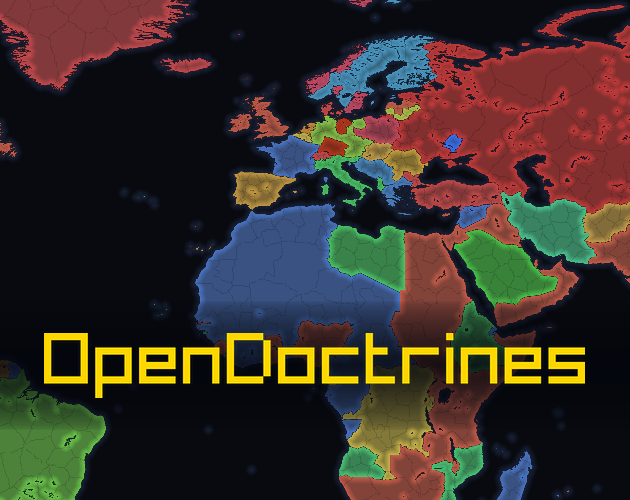
Open Doctrines is a turn-based grand strategy beta about running a country's industry, armies, research and politics across six historical scenarios or a world built in the map editor. Players manage provinces, negotiate ceasefires over land and claims, and can join multiplayer without router setup.
Open Doctrines is a turn-based grand strategy game from Pr1nted, in development and currently in beta, in which one person runs a country: its industry, armies, research, politics and relations with its neighbours. Six historical scenarios play out on a 1641-province world map, from the Powder Keg of 1914 to the Missile Crisis of 1962, and a map editor plus a procedural generator can build other worlds. Provinces carry population, industry, fortification, resources and ethnic composition; countries carry a treasury, a research programme, a political compass, claims and opinions of each other. Multiplayer runs over an encrypted connection, and mods are WebAssembly files built through an SDK with thirteen language bindings.
How to play Open Doctrines
- Choose one of six historical scenarios, from 1914 to 1962, or draw land, sea, provinces, countries and claims in the map editor and export the map for others to load.
- Run the country across turns: build industry and forts, set a research programme, recruit and reinforce armies, and pick doctrines, alliances and guarantees.
- Watch unrest, because rebellions grow out of it and hold real territory, and expect wars to pull in guarantee chains.
- Deal with neighbours through claims, opinions and negotiated ceasefires covering provinces, money and dropped claims.
- For multiplayer, host from the downloaded build so other players can dial out to it; a browser tab cannot listen for players.
Open Doctrines controls
The developer does not list specific controls on the game page. Click the play frame above and try the keyboard, mouse, or touch; most jam games show their controls on the first screen.
Tips for Open Doctrines
- Finishing the industry research tree halves build costs, so it pays to complete it.
- Saves made from this beta are expected to keep working as development continues.
- The AI plays a whole game but will not outplay an experienced player; the difficulty setting adds noise to its choices rather than making it smarter.
- On macOS the first launch needs right-click then Open, since double-clicking is refused; later launches behave normally.
- Hosting works from the downloaded build only, though signing in, the map, the map editor and mods all work in a browser.
Open Doctrines FAQ
Is there a tutorial?
No. There is no tutorial yet, and the game's own notes state plainly what else is still missing.
Which platforms are supported?
HTML5, Windows, macOS, Linux and Android. Windows needs 64-bit Windows 10 or later, macOS needs 11 or later, and Linux needs glibc 2.35 or newer on x86_64.
Does multiplayer need port forwarding?
No. Players dial out over an encrypted connection, and hosting is a listening socket on the host's machine that the game can open a tunnel to. The browser build cannot host.
Do mods work the same on every platform?
Yes. Mods are WebAssembly, so the same file runs everywhere, inside a sandbox with a capability grant that can be seen and revoked.
What happens to a player who disconnects mid-game?
They keep their seat and their country. The turn resolves without them and they get the same country back on return.
How finished is the game?
It is playable but not finished: the AI plays a full game and reliably beats random play, but it will not outplay a good player.
About this game
Read the full developer description
OpenDoctrines is a grand strategy game about running a country — its industry, its armies, its research, its politics and its neighbours. Six historical scenarios on a 1641-province world map, a map editor for building your own, multiplayer that needs no port forwarding, and a mod SDK for thirteen languages.
This is a beta. Alpha meant the shape was not settled; beta means it is, and saves made from here are expected to keep working. It is playable and not yet finished — there is no tutorial yet, and the section at the bottom says plainly what else is missing.
⭐ If you play it and like it, please rate it. Open Doctrines is free and made by one person. A rating on this page is the single biggest thing that helps other people find it - the stars are at the very bottom, under More information. It takes ten seconds and needs an itch.io account.
Join the Discord to find multiplayer opponents, enter the tournament, report bugs and vote on what gets built next.
Every turn is recorded
A finished game can be replayed as a timelapse and exported as a GIF from inside the game — the animated map in the screenshots above is the 1939 scenario, with every country played by the AI.
Run a country
Provinces have population, industry, fortification, resources and an ethnic composition. Countries have a treasury, a research programme, a political compass, claims on their neighbours and opinions about each other.
Rebellions spawn from unrest and hold real territory. Wars pull in guarantee chains. Ceasefires are negotiated over provinces, money and dropped claims.
Six scenarios
- Modern Day — 185 countries. Population from World Bank totals, deposits from USGS surveys.
- The Powder Keg (1914) — five empires and a continent of alliances waiting on one funeral.
- The Last Spring (1918) — Germany has won in the east and is losing in the west.
- The Gathering Storm (1939) — Europe on the morning the Wehrmacht crossed the Polish border.
- Year Zero (1945) — the war is over and nothing has been settled.
- The Missile Crisis (1962) — two blocs, one ocean between them, and missiles in Cuba.
Build your own world
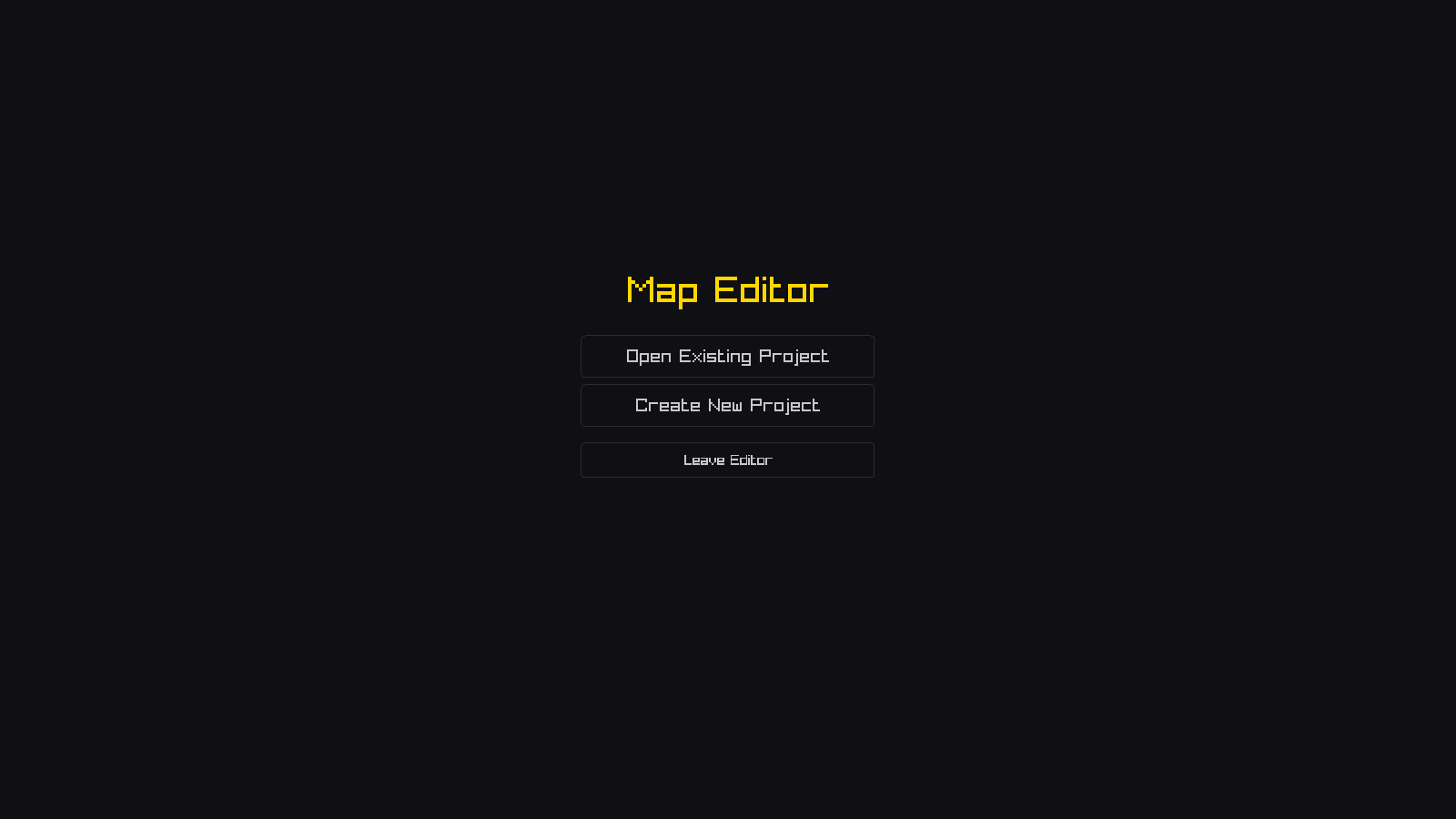
Draw land and sea, cut provinces, place countries, populations, resources and claims, then export a map anyone else can load. There is a procedural generator too, for when you want a world rather than a specific one.
Multiplayer
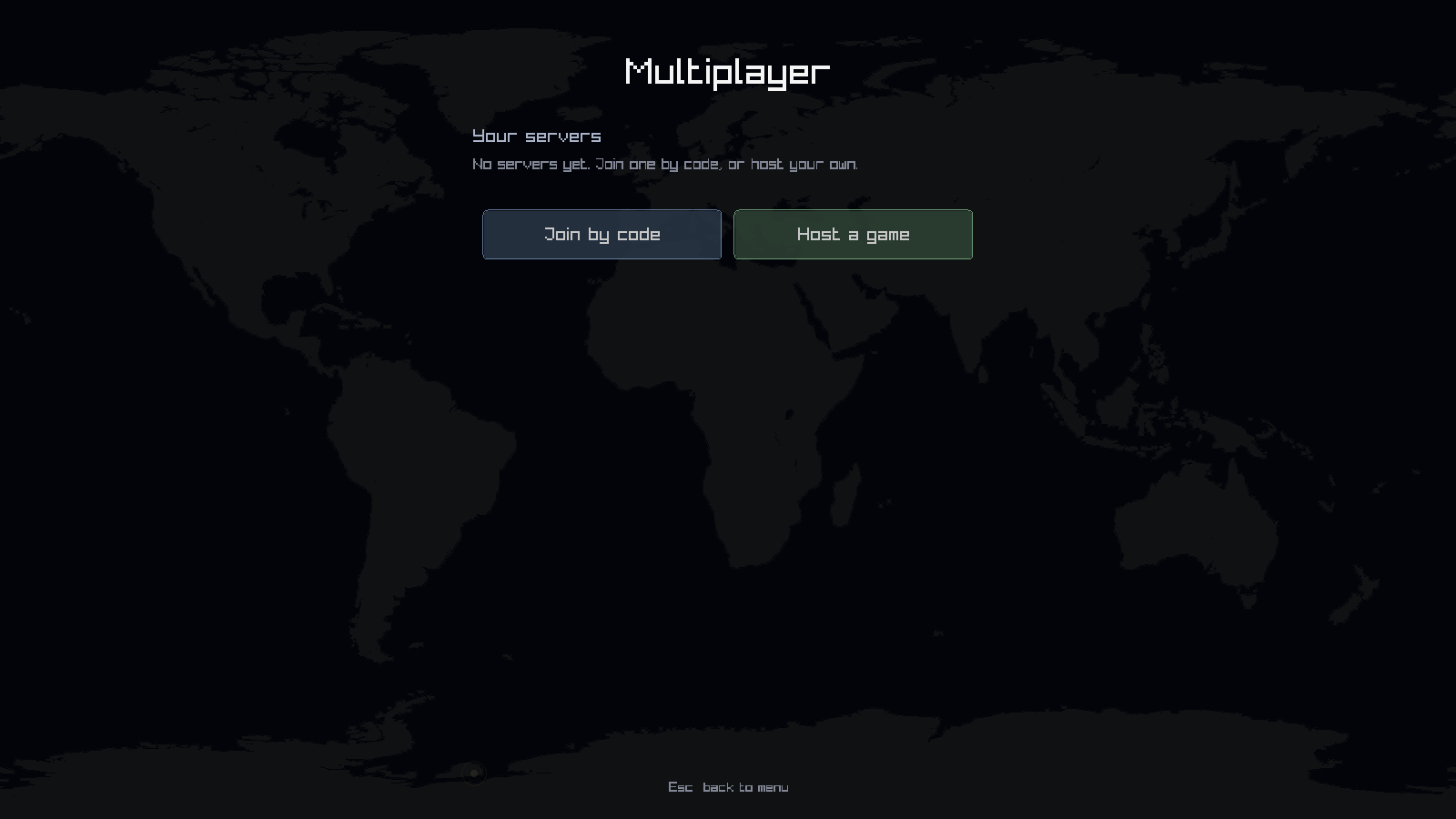
Players dial out over an encrypted connection, so joining needs no router configuration. Hosting is a listening socket on the host's machine, and the game can open a tunnel to it for you — so in practice there is nothing to forward either way.
The host is authoritative. State only ever flows server to client, orders are validated server-side and re-attributed to the authenticated player's country, and a client never computes a turn. A player who disconnects keeps their seat and their country: the turn resolves without them, and they get that same country back when they return.
Mods, in thirteen languages
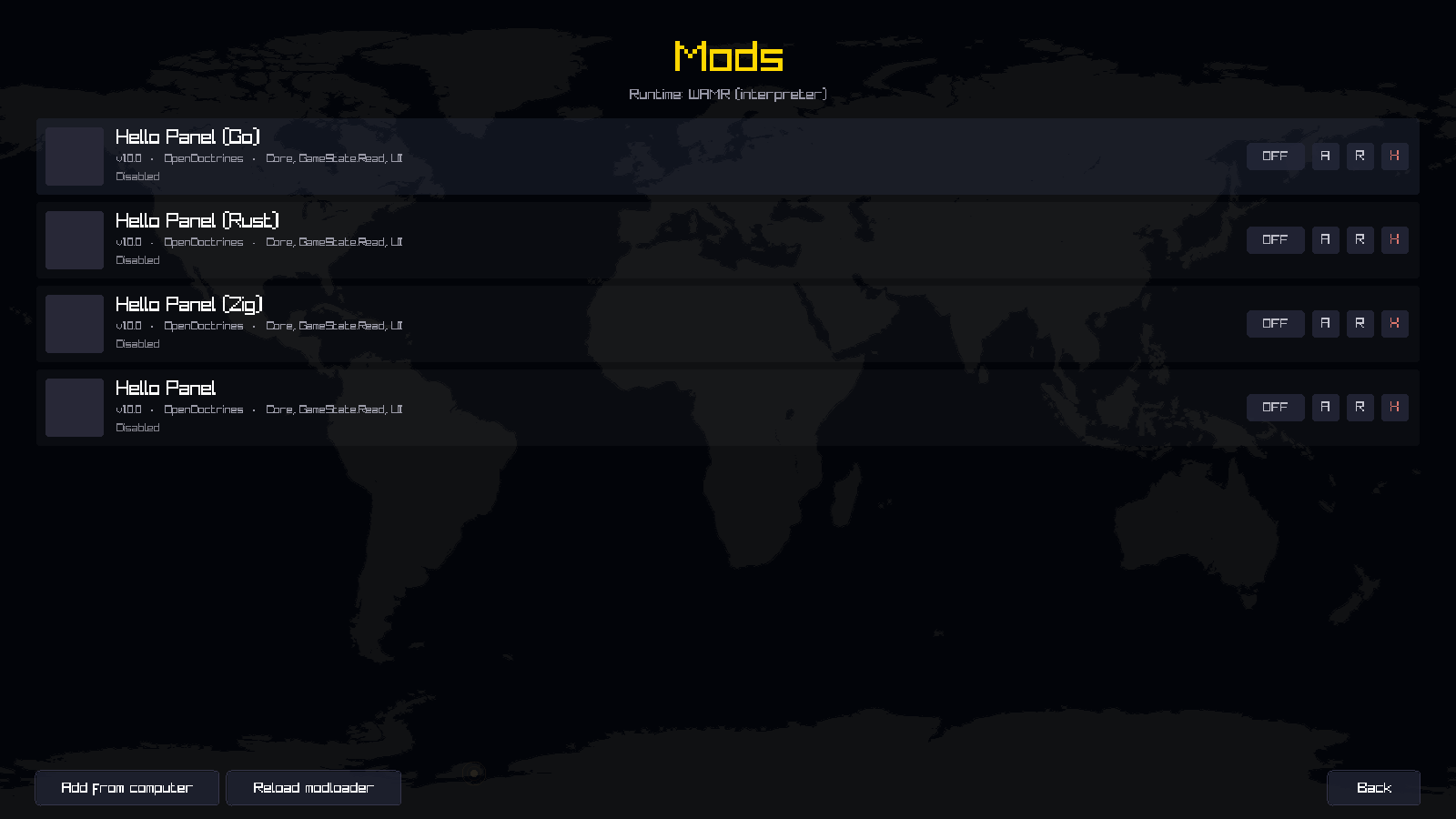
Mods are WebAssembly, so a mod is the same file on every platform, and it runs in a sandbox with a capability grant you can see and revoke. The SDK has bindings for C, C++, Rust, Zig, Go, Java, Kotlin, JavaScript, TypeScript, AssemblyScript, Lua, Python and hand-written WAT — every one of them builds the same example, and the test suite checks they all render byte-identical output.
Before you download
macOS. The app is not signed with an Apple Developer ID, so the first launch needs right-click → Open → Open. Double-clicking gives you a refusal with no way past it. macOS remembers the choice, so every launch after the first is normal. Requires macOS 11 or later.
Also, if that does not work, you can look up how to fix some of the problems on GitHub, there is more information about what can happen with macOS and how to go around it there
Windows. Unsigned, so SmartScreen shows "Windows protected your PC" on first run — More info → Run anyway. Requires 64-bit Windows 10 or later.
Linux. Requires glibc 2.35 or newer — Ubuntu 22.04, Debian 12, Fedora 36 and anything more recent. Older distributions can build from source. x86_64 only.
What is not finished
Being honest about a beta is cheaper than disappointing people later.
- The AI plays a whole game, and will not outplay a good player.
It is a neural network trained by self-play and against a league of its own
frozen past versions. It reliably beats random play, and is currently about
level with the hand-written strategy it is measured against — a rung it
has reached and not yet passed. It is still being trained. Each turn it picks from four menus: economy (industry,
forts, ports, specialisation, warships, research), politics (doctrines,
alliances, pacts, guarantees, and how it treats its minorities), war
(recruiting, reinforcing a threatened border, attacking, declaring,
artillery, offering a ceasefire) and the navy (routed movement, bombardment,
landing troops, engaging an enemy fleet). It answers diplomacy with reasons,
and keeps its word or does not in ways you can watch.
This build also fixes something that had been quietly holding it back: the AI now gets the research discounts it had already paid for. Finishing the industry tree halved a player's build costs and did nothing for the AI, which had been learning to play an economy more expensive than the one you play.
What it is not is a match for somebody who knows the game, and the difficulty setting changes how much noise it adds to its own choices rather than how well it plays. An earlier version of this page quoted a win rate; that figure has been withdrawn, because it measured an older build with a method too noisy to support one number. We would rather say nothing than quote a number we cannot stand behind. - The browser build cannot host. A browser tab cannot listen for players. Signing in does work there now, and everything else — the map, the map editor, mods — works in a browser.
Licence
Free to play, modify and share non-commercially, under the OpenDoctrines Non-Commercial License. The mods, maps, saves and videos you make are yours.
Support
The game is free on every platform it runs on, and nothing in it is behind a payment. If you would like to put something towards the storefront fees, the servers and the domains, there is a Ko-fi.
Description from Open Doctrines on itch.io, by Pr1nted.
Screenshots
Not listed by the developer: controls, release date, in-game language options, download size. We left these out rather than guess.